Thursday, November 13, 2008

Talk face to face with Gmail voice and video chat

Voice and video chat
 
Gmail has launched New video chat. Let chat with ur friends and family with face to face..
See and hear family and friends right inside Gmail


It's free and installs in seconds

System requirements: Windows XP or later

  • Chat more ways than ever from within Gmail
  • Look and sound your best with high quality audio and video
  • Get started easily -- all you need is a webcam


Wednesday, November 12, 2008

Google analytics new features are now available in your account! Let's take a deeper look, starting with Motion Charts.

Google has analytics is available free for all google users in a new look and more features.
 

New Pyramid Found in Egypt: 4,300-Year-Old Queen's Tomb

A new pyramid has been discovered deep beneath Egyptian sands, archaeologists announced today. The 4,300-year-old monument is believed to be the tomb of Queen Sesheshet, the mother of Pharaoh Teti, the founder ancient Egypt's 6th dynasty.

Once nearly five stories tall, the pyramid—or at least what remains of it—lay beneath 23 feet (7 meters) of sand as well as a small shrine and mud-brick walls from later periods.

The discovery is the third known "subsidiary" pyramid to the tomb of Teti. It's also the second pyramid discovered this year in Saqqara, an ancient royal burial complex near current-day Cairo.


Tuesday, November 11, 2008

Mars Lander Pronounced Dead, Despite "Lazarus Mode"

After five fruitful months, the Phoenix Mars Lander is believed to have sent its last dispatch to Earth, said NASA scientists who announced the end of the mission Monday.

There is a slight chance, though, that the lander's energy-saving "Lazarus mode" could allow Phoenix to be rise again after the long Martian winter, albeit in a limited capacity.

The craft might have lasted till December, but frigid temperatures and lack of sunlight, largely due to a dust storm, are draining the lander's solar-powered batteries, perhaps permanently.

Researchers haven't heard a peep from the craft since November 2.

"At this time, we're pretty convinced that the vehicle is no longer is available for us to use," said Doug McCuistion, director of NASA's Mars Exploration Program.

But Phoenix scientists are in no mood to brood.

Launched in August 2007, the Phoenix Mars Mission was designed to study the water history and potential for life in the ice-rich soil near Mars's north pole.

The mission accomplished "99 percent of what we proposed to do," said mission principle investigator Peter Smith off the University of Arizona.

The lander has exceeded expectations overall, he said. The mission was to last 90 sols, or Martian days, which are 24 hours and 39 minutes each. Phoenix stopped communicating after 150 sols.

"It's really an Irish wake, rather than a funeral," McCuistion said. "We should celebrate what Phoenix has done and what the team has done."

MORE >>

Courtesy: http://www.nationalgeographic.com/


Sunday, November 9, 2008

Browser Wars: Six Test Drives, Starting With Google's Chrome

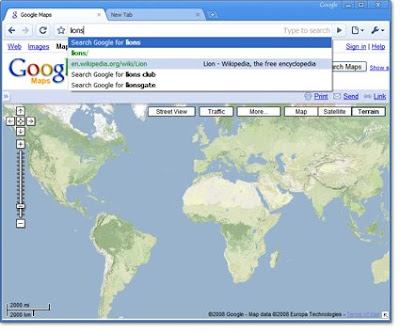
Chrome, Google's shiny new Web browser, has some eye-catching features. (MCT HANDOUT / September 4, 2008)

We've had two months to try out Chrome, Google's foray into the world of Web browsers, and what's clear is that there's a full-fledged battle for the hearts and minds of Internet surfers. It's a high-stakes game, with losers often left as mere technological footnotes: Remember Netscape Navigator? We took six of the most popular free browsers for a test drive:

Chrome

We all know Google will eventually control the universe, and Chrome is the next stage in the quest.

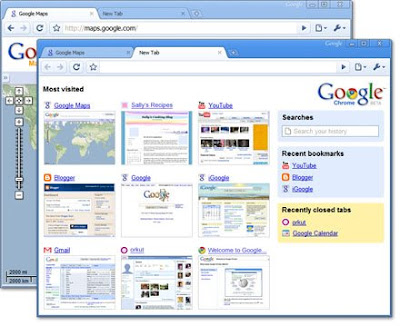
Forward: The "incognito" mode, which prevents the browser from recording your searches, is handy for off-the-record browsing and helpfully pops open a distinct dark-blue-bordered window whenever it's in use. But be warned: It won't prevent your IT department from spying on you at work. Thumbnail images of your nine most-visited pages are displayed whenever you open a tab. (This technique was introduced to Web users with Opera's Speed Dial.) Users can also designate multiple pages to launch as tabs when the browser opens.

Stop: Chrome is in Beta testing, so it still has kinks: The browser freezes for several seconds frustratingly often. Some critics have concerns that Google is watching what Chrome users are searching for, but if you're someone who can't live without Gmail, odds are you'll want to Chrome up.

Firefox

Nearly four years after it showed the world that Internet Explorer wasn't the only way to browse, Mozilla's Firefox still provides an adaptive, innovative experience that's tough to top.

Forward: Mozilla encourages its users to create add-ons for Firefox, which are small pieces of software that expand functionality. Want a Speed Dial-type feature such as Opera's or Chrome's? A free add-on does it for you. Ever accidentally closed your browser with six tabs open? Firefox helpfully prompts you to save before doing this; the next time you open Firefox, you'll be back where you left off.

Stop: That last part about add-ons throw you off? Some users won't appreciate the change-it-yourself nature of Firefox, preferring a browser with the pre-loaded features of Chrome or Opera.

Flock

"The social web browser" is built from Firefox's template and caters to social networkers who want to access their various Web 2.0 accounts simultaneously.

Forward: For those deep into the Flickr-Twitter-Blogger- Facebook (Flitterblook?) community, Flock uses the left side of the browser window to display friend lists, status updates, e-mail and RSS feeds. The Flickr mini-bar occupies the top of the screen and displays photos posted by friends on any site you're signed in to. Flock's blogging tool lets users post entries from any browser window, so you don't have to navigate to the blog's home page.

Stop: When using all of the features, toolbars occupy more of the screen than regular Web content: It renders the information-gathering function of the Web an afterthought. If anything, Flock helps users procrastinate, with the constant distraction of media harming the browser's ability to make life on the Web easier.

Internet Explorer

Internet Explorer 7 was highly uninspiring; with Version 8, the makers of the world's most popular browser (in terms of market share) still have work to do.

Forward: Add-ons finally make an appearance in the IE universe, as Microsoft gives users room to innovate. Credit the developers for advancing the concept of tabbed browsing by automatically grouping tabs by subject. IE 8 also adds tools called Accelerators, which let users take information such as a business address from one page and enter it on another site, such as Mapquest, with a single click.

Stop: Like Chrome, IE 8 is in beta test mode; unlike Chrome, it feels like it. Many features, such as Web Slices — a tool designed to monitor specified sites for updates so users can track changes without having to visit the site — are difficult to configure and use. If the goal of a browser is to let people customize their Web experience, why does IE 8 pester users to enable certain features that were intentionally disabled?

Opera

This is the best browser that most people haven't heard of. It has all the functionality of its peers with none of the fanfare. There's even a mini version for mobile phones.

Forward: Opera's Speed Dial feature is difficult to live without; you select your favorite sites, and the browser catalogs thumbnails of them whenever you open a new tab. Veteran file sharers will love the built-in BitTorrent downloader, great for downloading media. And if you use Opera on multiple devices, Opera Link automatically syncs your Speed Dial choices, bookmarks and search history.

Stop: Because of Opera's relative obscurity, some popular Web sites don't completely work with it. For example, updating Yahoo Sports Fantasy Football rosters relies on a series of outdated pull-down menus that most other browsers have long outgrown.

Safari

Apple acolytes will love this; everyone else will wonder what all the fuss is about.

Forward: Apple has earned a reputation for making software that simply ... works. Safari is no exception. Pages seem to load slightly faster, on average, than with Firefox, Opera or Internet Explorer, and the browser seems virtually crash-proof. It has a functional design that skips many of the perfunctory toolbars that clutter other browsers. Like Chrome, it offers a Private Browsing feature that keeps your searches off the record.

Stop: Perhaps Safari's best-selling point for casual users is that there's nothing particularly fancy about it. If you're overwhelmed by talk of add-ons and Speed Dials, Safari might be just your speed; if you want bells and whistles, it might be underwhelming.

Saturday, November 8, 2008

PHP - Opensource, Tutorials, Sample programs

At w3dummies you will find all the Web-building tutorials you need, from basic HTML and XHTML to advanced XML, SQL, Database, Multimedia and WAP. Our references cover all Web-building technologies, including W3C standards like HTML, XHTML, CSS, XML and other technologies like JavaScript, PHP, ASP, SQL and much more.

Thursday, November 6, 2008

Obama races to victory, brings 'change' to America

Smashing through the country's "colour line", Barack Hussein Obama was Wednesday elected 44th president of the United States, a position that will vest unparalleled global power in the son of a Kenyan father and a white American mother.

He will take office on Jan 20 with his vice president-elect Joe Biden at a White House ceremony.

As the world watched in awe and admiration, Obama got an overwhelming mandate in the electoral college - 338 votes to Republican John McCain's 158 - exorcising the lingering ghosts of racism 145 years after the US abolished slavery.

"Change has come to America," the Democratic candidate said, addressing the country as the president-elect from an open blue stage before an ocean of people in his hometown of Chicago. "It's a long time coming, but because of what we did on this day, at this defining moment, change has come to America," he said to deafening roars from his supporters, many of whom, particularly blacks, wept at the achievement.

After an acrimonious campaign, Obama and McCain were gracious in their moments of victory and defeat. "He has endured sacrifices for America that most of us cannot begin to imagine," Obama said of the Vietnam war veteran McCain and called him "brave and selfless".

McCain, in turn, praised his rival's inspirational and precedent-shattering campaign. "We have come to the end of a long journey," he told supporters in Phoenix, Arizona. "I urge all Americans who supported me to join me in not just congratulating him but offering our next president our goodwill."

Obama will assume the leadership of a nation facing a daunting economic crisis and mired in two wars - factors that pushed a nation looking for change away from the unpopular President George W. Bush's Republican Party.

"The road ahead will be long. Our climb will be steep. We may not get there in one year or even one term, but America - I have never been more hopeful than I am tonight that we will get there," he said in a rousing speech that was heard by millions around the world.

The disenchantment with Bush gave the Democrats a majority in the Senate and the party has picked up almost a score of seats in the House of Representatives, boosting Obama's capacity to promote his agenda.

Obama's extraordinary feat a mere 43 years after the blacks won full civil rights - and a long 138 years after they got the vote - in a large measure stemmed from what the New York Times called his "improbable, unshakable conviction that America was ready to step across the colour line".

It was a realisation of the dream of the assassinated civil rights leader, Martin Luther King. Forty-five years ago, he had declared his dream that one day people would be "judged not by the colour of their skin, but by the content of their character".

Obama acknowledged Mahatma Gandhi's inspiration just as King had done. "In my life, I have always looked to Mahatma Gandhi as an inspiration, because he embodied the kind of transformational change that can be made when ordinary people come together to do extraordinary things," Obama wrote in an article. "That is why his portrait hangs in my Senate office; to remind me that real results will not just come from Washington, they will come from the people."

Obama said in a recent interview with IANS, that he believes that "India is a natural strategic partner for America in the 21st century and that the US should be working with India on a range of critical issues from preventing terrorism to promoting peace and stability in Asia."

Indian Prime Minister Manmohan Singh Wednesday congratulated Obama and said: "Your extraordinary journey to the White House will inspire people not only in your country but also around the world."

News of Obama's win set off celebrations by supporters around the country and the world, from Times Square in New York to the Ebenezer Baptist Church in Atlanta, civil rights leader Martin Luther King's home church, and to New Delhi.

"Most Americans here that I spoke with expressed a sigh of relief," Sharon Lowen, an American danseuse who lives in India and practises Indian classical dance, said in New Delhi, where Indians joined Americans in celebration. "They were earlier shy to be branded as Americans - with Obama's victory we are proud now to be Americans."

African-Americans in the US wept and danced in the streets Tuesday night, declaring that a once-reluctant nation had finally lived up to its democratic promise.

The Rev. Jesse Jackson, a civil rights leader and onetime presidential contender, joined the celebrations in Chicago, tears streaming down his cheeks.

"This is a great night. This is an unbelievable night," said US Representaive John Lewis of Georgia, who was brutally beaten by police in Selma, Alabama, during a voting rights march in the 1960s.

Others exulted in small towns and big cities. And white voters marvelled at what they had wrought in turning a page on the country's bitter racial history, the Times said.

President Bush, whose long shadow loomed heavily on the McCain campaign with the election becoming a kind of referendum on his eight-year rule, too called Obama to congratulate him on his victory.

"I promise to make this a smooth transition," the president said to Obama. "You are about to go on one of the great journeys of life. Congratulations, and go enjoy yourself."

Obama became the first Democrat since Jimmy Carter in 1976 to receive more than 50 percent of the popular vote, and made good on his pledge to transform the electoral map.

He overpowered McCain in Ohio, Florida, Virginia and Pennsylvania - four states that the campaign had spent months courting as the keys to victory.

The Democrat easily won most of the Northeast and mid-Atlantic states that normally back Democrats, including New Hampshire, and ran strong in states that are normally solid for Republicans, such as Virginia, Indiana and Florida.